


Sharing a file via a link offers several advantages over attaching it directly to a message. Using a link reduces the strain on email systems, as attachments can take up significant space and cause delivery issues with large files. Additionally, links allow for more efficient sharing of files, especially larger ones, without encountering size limitations commonly imposed by email providers.
Even more importantly, when sharing via a link, users can maintain a single version of the file that can be updated or changed without having to resend it—ensuring recipients always access the most current version. This method also offers enhanced security by enabling the sender to control access permissions, granting specific individuals or groups the ability to view or edit the file while maintaining privacy and preventing unauthorized downloads.
Here’s how you can share a file with your iCloud account using a link:
- Open Finder and locate the file you want to share.
- Drag and drop the file into the iCloud Drive folder.
- Wait for the file to upload to iCloud.
Generating an iCloud Link:
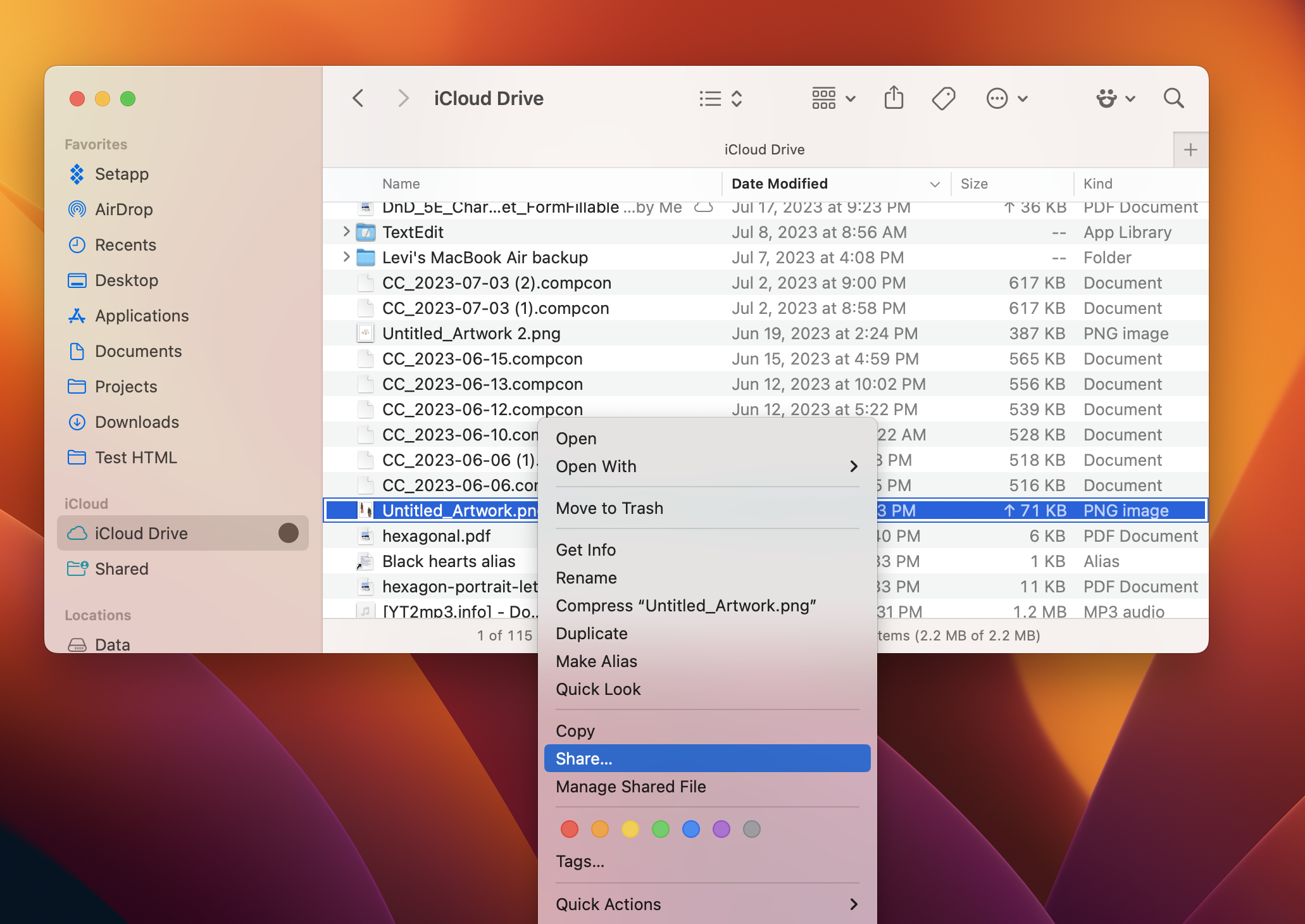
- Open Finder and locate the file in iCloud Drive.
- Right-click (or Control + click) on the file.
- Choose "Share" from the dropdown menu
- In the Popover that appears click the "Only invited people can edit" button
- Then adjust the settings to "Who can access: Anyone with the link" and "Permissions: View only".
- Finally click the "Invite with link" share extension.
Sharing the iCloud Link:
- Email or Message:
- Open your email or messaging app.
- Compose a new message or reply to an existing one.
- Paste the iCloud link into the body of the message.
- Direct Link Sharing:
- You can paste the iCloud link in any text field (e.g., social media platforms, notes app, etc.) where you want to share the link.
Granting Access Permissions (Optional):
- Before sharing the link, you can adjust the access permissions by clicking on the link sharing settings.
- You may set permissions to "Anyone with the link" or limit access to specific people.
- You can also set whether people can view, edit, or have other permissions for the file.
Creating a Shareable iCloud Link
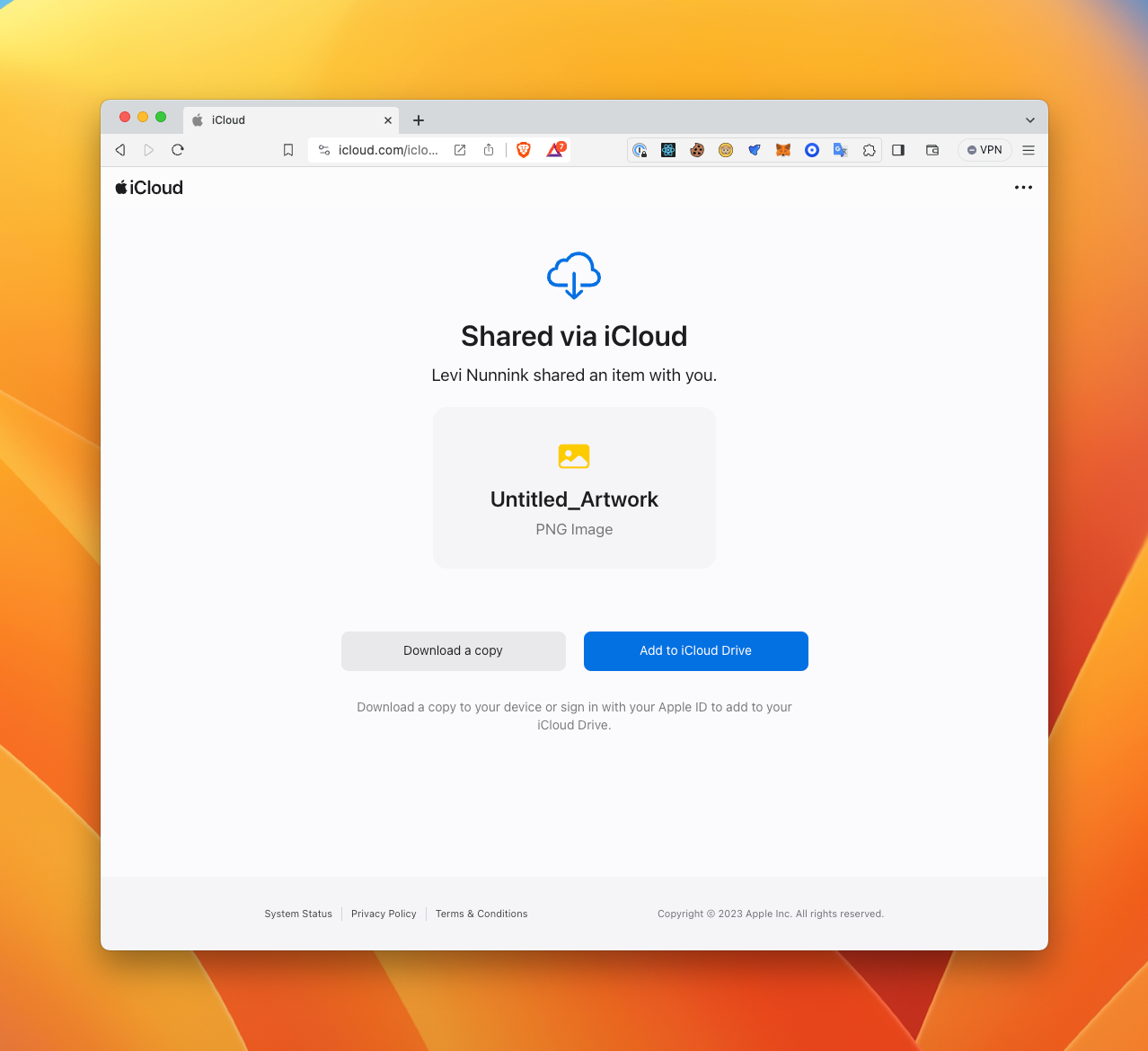
When you need to create a shareable iCloud link, the most important step is ensuring the link is accessible to your intended recipients. A shareable iCloud link allows anyone with the URL to access your file without needing special permissions or an Apple ID (in most cases). This is ideal for collaboration, sending files to clients, or sharing content with a wider audience.
To create a truly shareable iCloud link, make sure you set the access permissions to "Anyone with the link" rather than restricting it to invited people only. This ensures the link works universally and recipients won't encounter unexpected login prompts. Once you've generated your shareable iCloud link, you can distribute it via email, messaging apps, or post it anywhere online.
Keep in mind that while a shareable iCloud link is convenient, it does count against your iCloud storage quota, and you won't get detailed analytics on who accessed the file or when. For more control over your shared links, consider using a dedicated file sharing service that offers custom branding and tracking features.
iCloud Link Sharing on iPhone and iPad
You can also share iCloud files from your iPhone or iPad:
- Open the Files app and navigate to iCloud Drive.
- Long-press on the file you want to share and tap Share.
- Tap Collaborate at the top of the share sheet, then switch it to Send Copy if you just want to send the file — or keep Collaborate if you want a live link.
- For a shareable link, tap Share Options, set "Who Can Access" to Anyone with the Link, and set "Permission" to View Only.
- Choose how to share the link — Messages, Mail, Copy Link, or any other app.
iCloud Link Sharing Limitations
iCloud link sharing works, but it has some rough edges you should know about:
- Recipients sometimes need an Apple account. While "Anyone with the link" is supposed to work for everyone, non-Apple users occasionally hit sign-in prompts or slow-loading pages.
- Links can be slow. iCloud links sometimes take a while to generate, and the download experience for recipients isn't always fast — especially for larger files.
- No custom branding. Your shared file appears on an Apple-branded page. There's no way to add your own logo or identity.
- No analytics. You can't see if someone opened your link or how many times the file was downloaded.
- No password protection. iCloud links are either accessible to anyone with the link or restricted to specific Apple IDs. There's no middle ground like password-protecting a link.
- Limited link customization. You get a long, unmemorable iCloud URL. You can't create a clean, branded link.
- Files count against your iCloud storage. Everything you share via iCloud sits in your iCloud Drive and counts toward your storage limit.
For sharing files with family or within the Apple ecosystem, iCloud works fine. But if you're sharing files professionally — with clients, collaborators, or a wider audience — these limitations start to matter.
A Simpler Alternative: Smmall Cloud
If you want file sharing that works for everyone (not just Apple users), Smmall Cloud is worth a look. It's a file sharing app for Mac, iPhone, and iPad that gives you:
- Custom branded links — your name and logo on every shared file, not Apple's
- Clean, short URLs — like
yourname.smmall.cloud/l/project-filesinstead of a long iCloud URL - QR codes — every link gets a QR code automatically
- Password protection — lock sensitive files behind a password
- View analytics — see when and how often your files are viewed
- Works for any recipient — no Apple account needed, no sign-in prompts
Upload a file, get a link. It's that simple. Try Smmall Cloud free for 2 weeks.